- Projekt LIFE ARTEMIS
- Slovenski gozdovi
- Tujerodne vrste
- Vplivi
- Vplivi na biotsko raznovrstnost
- Vplivi na gospodarstvo
- Vplivi na zdravje ljudi
- Ukrepi
- Pretekli projekti
Projekt LIFE ARTEMIS – Osveščanje, usposabljanje
in ukrepanje za invazivne tujerodne vrste v gozdu
Home > Alien species > Alien plants > Hackberry


NATIVE RANGE: North America
PATHWAYS: horticulture, silviculture
POSSIBLE TO DETECT: year-round
FLOWERING SEASON: April – May
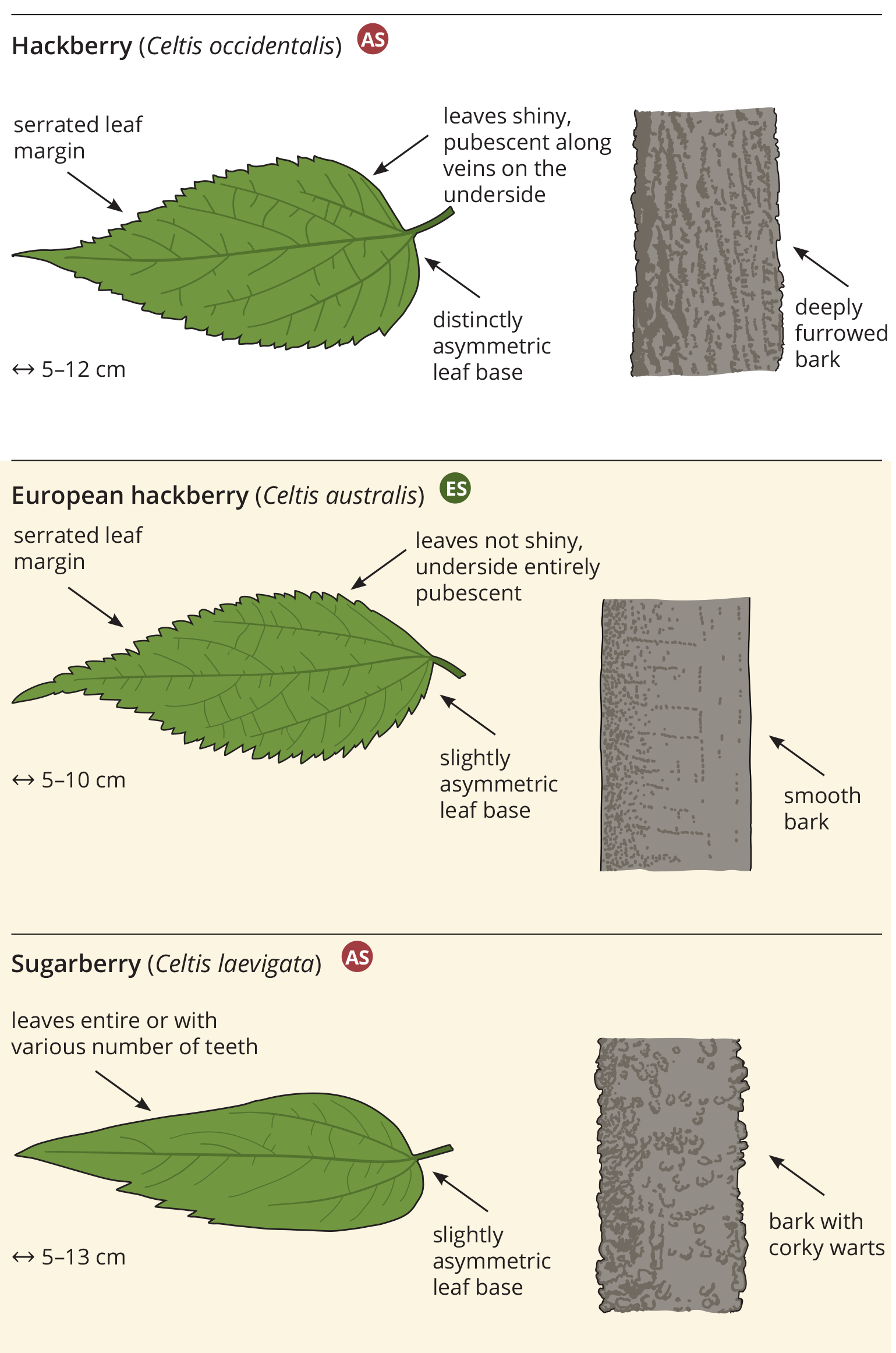
DESCRIPTION: Small to medium-sized, deciduous tree with a wide spreading crown. Bark dark grey with deep, vertical furrows. Leaves simple, oblong-ovate or elliptic with asymmetric base and serrated margins. These are smooth, shiny green above, paler below and somewhat pubescent along veins. Flowers are monoecious, green, small and inconspicuous. Fruits are round drupes 7–10 mm in diameter, with a 1–2 cm long stalk. Fruits turn orange, then dark purple as they ripen.
HABITAT: A variety of forest habitats including riparian forests, but not in places which are frequently flooded.
STATUS: Recorded locally, especially in Germany and France.
SIMILAR SPECIES: European hackberry (Celtis australis) has a smooth bark, similar to beech. Leaves of the European hackberry have a slightly asymmetric base and a pubescent underside. Fruits have a similar shape but are black when ripe. Sugarberry (Celtis laevigata) has narrower leaves which are entire or with several teeth. Bark has many corky warts but smooth in between.
SOURCE: Field Guide to Invasive Alien Species in European Forests