- Projekt LIFE ARTEMIS
- Slovenski gozdovi
- Tujerodne vrste
- Vplivi
- Vplivi na biotsko raznovrstnost
- Vplivi na gospodarstvo
- Vplivi na zdravje ljudi
- Ukrepi
- Pretekli projekti
Projekt LIFE ARTEMIS – Osveščanje, usposabljanje
in ukrepanje za invazivne tujerodne vrste v gozdu
Home > Alien species in Slovenia > Alien plants > Russian vine


NATIVE RANGE: Central and East Asia
FIRST FINDING IN SLOVENIA: 1980
PATHWAYS: horticulture
POSSIBLE TO FIND: year-round
FLOWERING SEASON: July-September
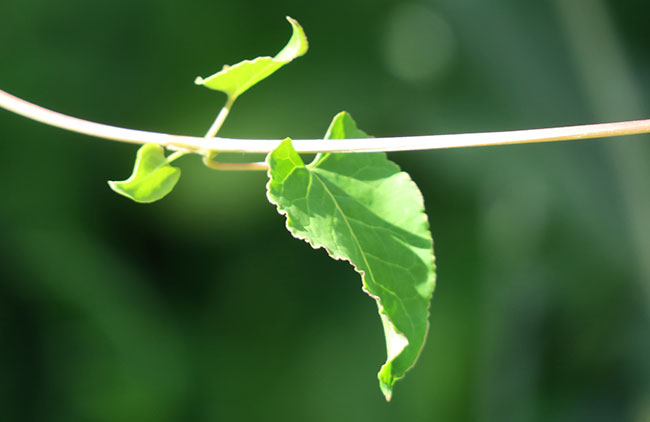
DESCRIPTION: A perennial, deciduous woody climber. It has brown bark with lenticels. Leaves are opposite, simple, oblong-ovate with acute apex, often growing from the stem in groups of 2 or 3 leaves. Leaf margins and the whole lamina appear wavy. Flowers are small, 5–8 mm across, with five tepals (perianth segments) which are white, greenish or pale pink, with pubescent filaments among the stamens. Flowers are borne in branched clusters up to 15 cm long. The fruit is a shiny black achene, 2 mm wide, enclosed in the three outer tepals which persist after flowering.
HABITAT: In its native range it grows in forests on mountain slopes and valleys. In Europe it is especially found in places where garden waste is dumped.
STATUS: Widespread in western Europe with most observations from the UK. Found locally elsewhere. Found on several localities in the Submediterranean climate zone in Slovenia. Commonly grown in gardens in order to cover walls.
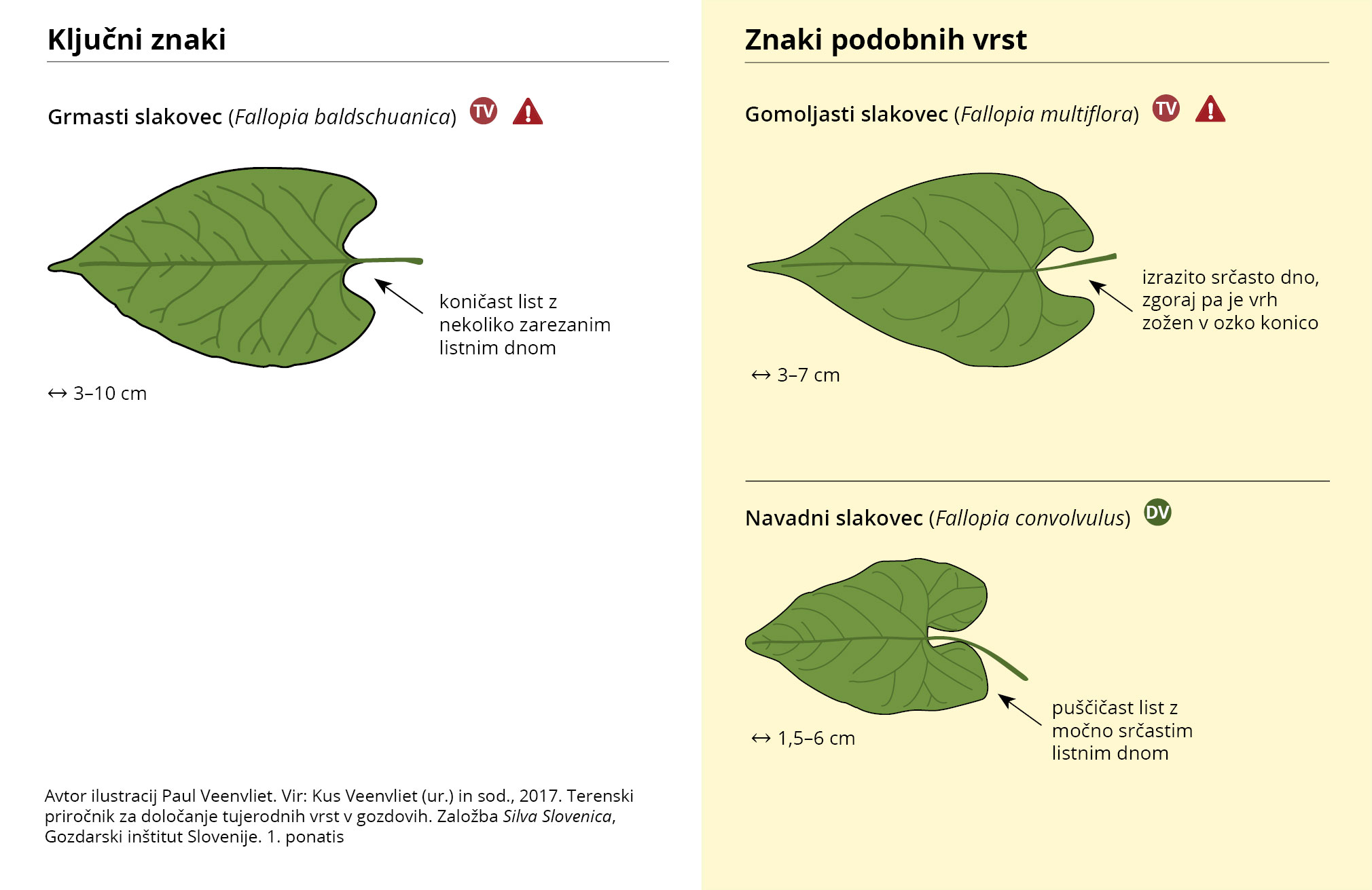
SIMILAR SPECIES: Chinese knotweed (F. multiflora) has acuminate leaf apexes and cordate leaf bases. Leaves are not wavy. Flowers 2–4 mm across, filaments are glabrous. Bark without lenticels. Black bindweed (F.convolvulus) and copse bindweed (F. dumetorum) have much smaller leaves with a pronouncedly cordate leaf base.
SOURCE: Field Guide to Invasive Alien Species in European Forests